
A practical planning guide for an emotional, relaxed wedding day
One of the most personal decisions couples make when planning their wedding day is whether to see each other before the ceremony. A wedding first look gives you a private moment together before walking down the aisle, while waiting preserves the tradition of seeing each other for the first time during the ceremony.
There is no single right answer. Some couples love the intimacy and flexibility a first look creates. Others have always imagined the emotion of meeting at the altar and would not want to experience it any other way. Both choices can lead to meaningful photographs and a beautiful wedding-day experience.
After photographing weddings for nearly 19 years, I have learned that the best decision is the one that reflects who you are as a couple. Your choice should not be based only on trends, pressure from a photographer, or what you see on social media. It should support the way you want the day to feel.
In this guide, I will explain what a first look is, how it affects your photography and schedule, what happens during the moment, and how to decide whether a first look before the wedding is right for you.
What Is a Wedding First Look?
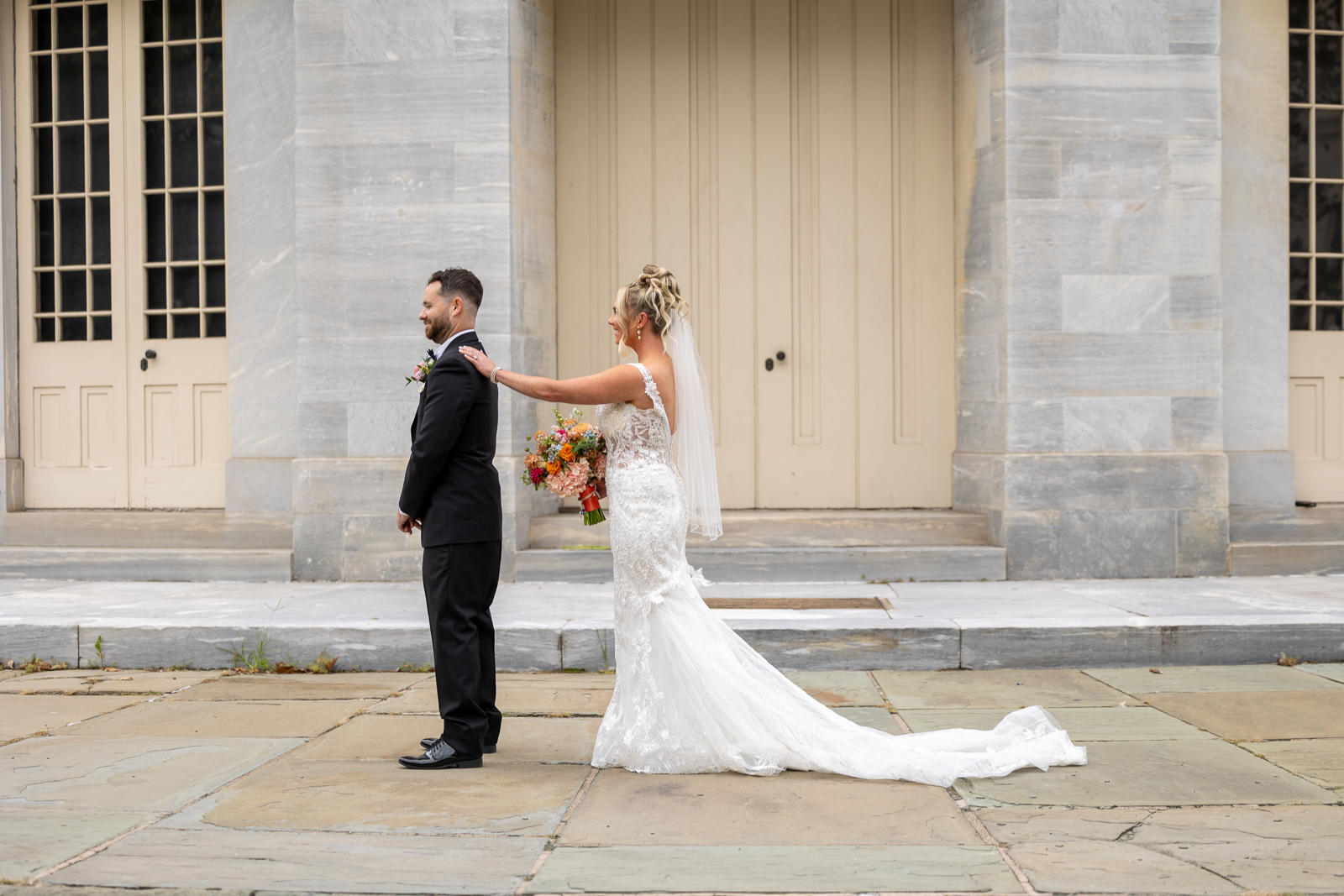
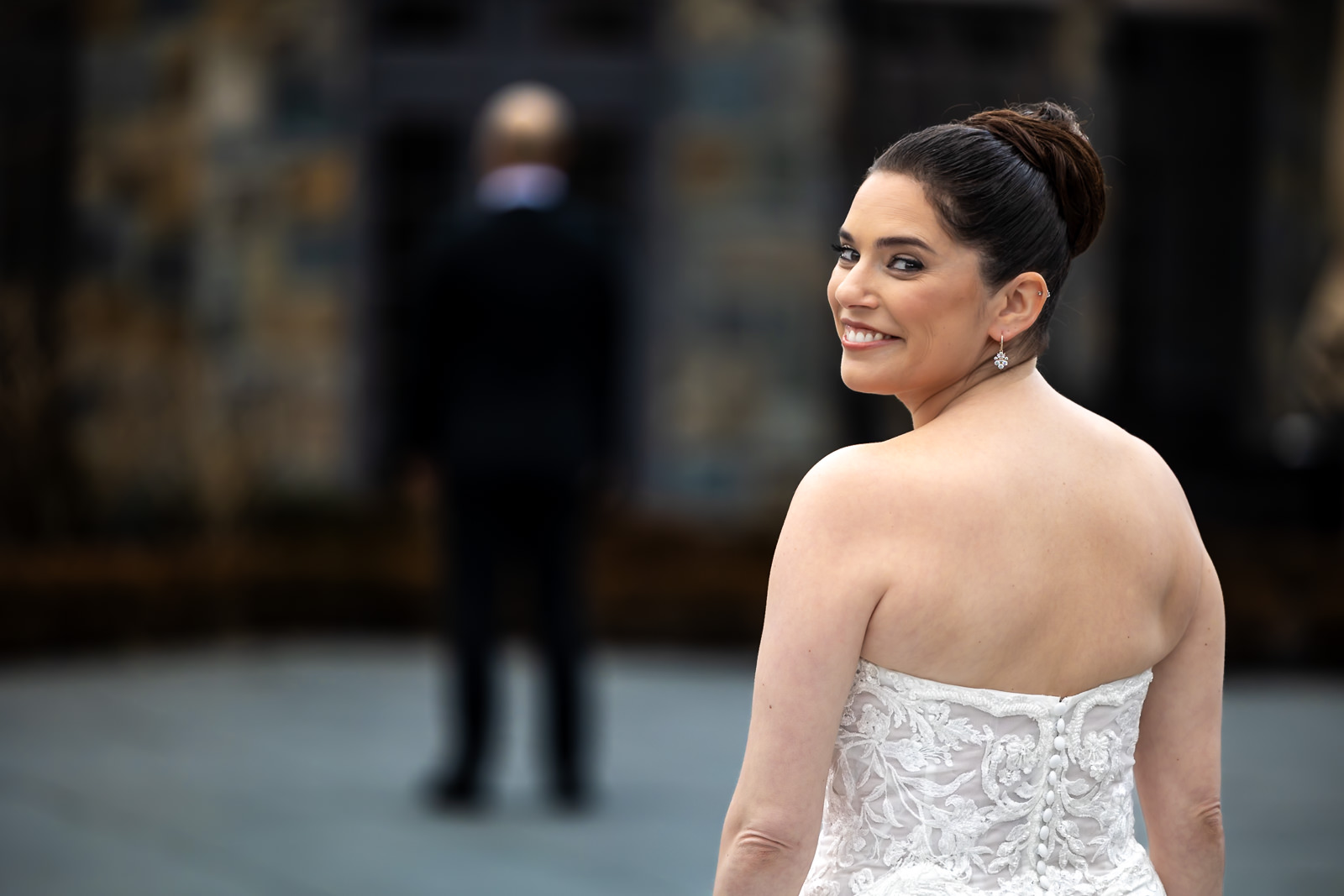
A wedding first look is a planned moment when a couple sees each other before the ceremony. It usually happens after both partners are dressed and ready, but before most guests arrive. Your photographer helps choose a private location with flattering light and enough space for the moment to unfold naturally.
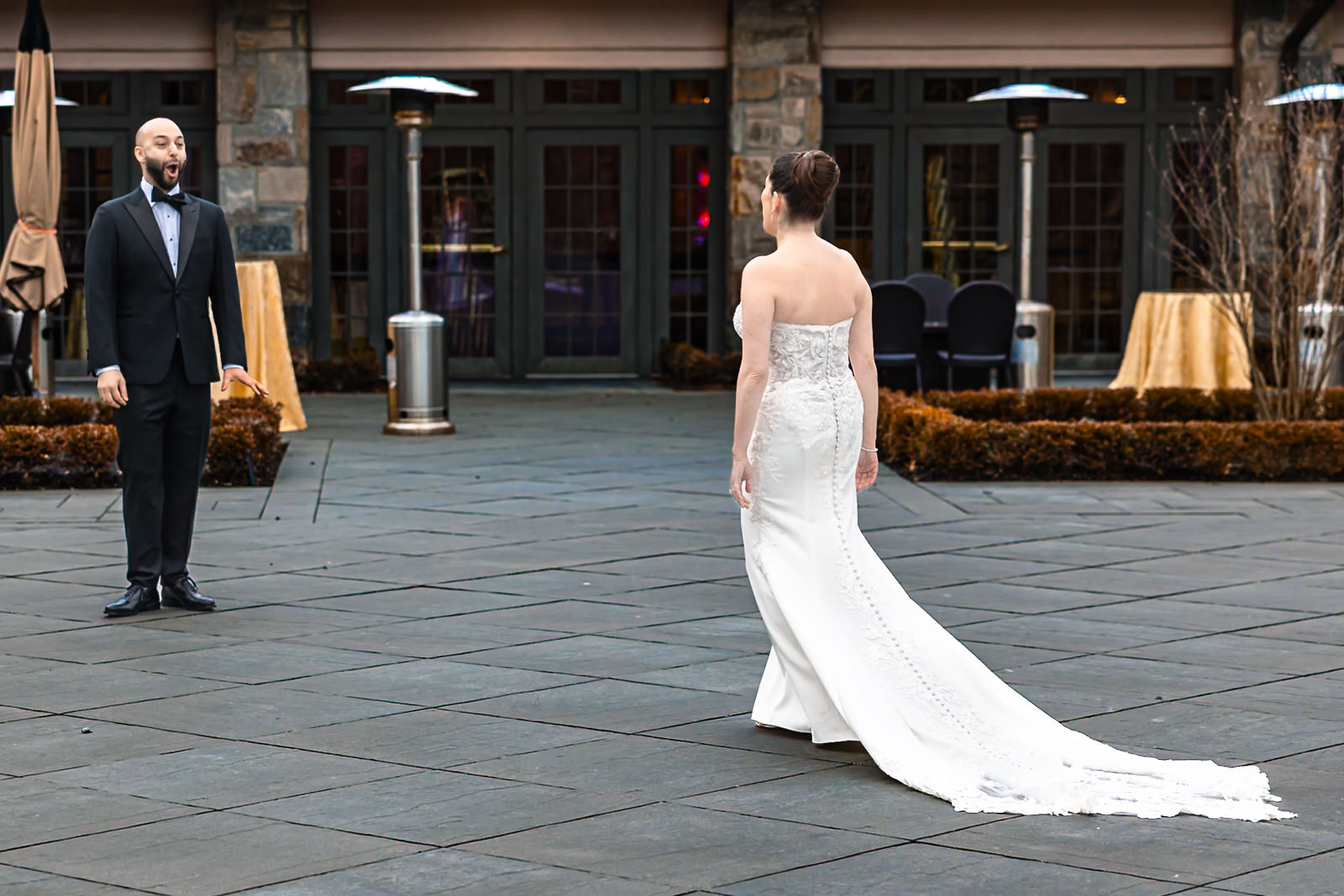
The setup is simple. One partner waits in place while the other approaches from behind. There may be a tap on the shoulder, a quiet greeting, or no direction at all beyond turning around when it feels right. From there, the couple is given time to react, talk, laugh, hug, and take in the fact that the wedding day is truly happening.
Although it is called a “first look,” it is not meant to be a performance. You do not need to produce a dramatic reaction for the camera. Some people cry. Some laugh. Some become very quiet. Others immediately start talking because that is how they process emotion. Every response is genuine when couples are allowed to experience the moment in their own way.
Why Do Couples Choose a First Look Before the Wedding?
Couples choose a first look for both emotional and practical reasons. For many, the greatest benefit is having a few private minutes together during an otherwise busy day.
Wedding mornings often build with anticipation. You may be surrounded by family, friends, makeup artists, wedding planners, and members of the photography and video teams. Seeing your partner can make everything feel more grounded. The person you planned the day with is suddenly standing in front of you, and the celebration begins to feel real.
A first look can also ease nerves. It does not remove the emotion of the ceremony; it simply gives that emotion another place to live. I have seen couples become visibly more relaxed after seeing each other. They talk, breathe, reconnect, and move into the rest of the day feeling like a team.
From a planning perspective, a first look creates the opportunity to complete some or most portraits before the ceremony. Depending on your locations and family arrangements, this may include:
- Couple portraits
- Wedding-party photographs
- Immediate-family portraits
- Individual portraits of each partner
- Photographs with parents or siblings
Completing these photographs early can give you more time with guests during cocktail hour and reduce the number of formal combinations needed after the ceremony.
Does a First Look Take Away From the Ceremony?
This is one of the most common concerns I hear, and in my experience, the answer is no.
The first look and the ceremony are emotionally different moments. A first look is usually quiet and private. The ceremony includes the music, the walk down the aisle, your families, your guests, the setting, and the meaning of making your commitment publicly. Seeing each other earlier does not recreate or replace that experience.
Many couples who have a first look still become emotional during the ceremony. The context has changed. You are no longer simply seeing what your partner is wearing; you are watching the person you love walk toward you as the ceremony begins.
At the same time, if waiting until the aisle is deeply important to you, that deserves to be honored. Photography should support the meaning of your day, not ask you to give up a moment you have imagined for years.
How a First Look Changes Your Wedding-Day Timeline
A first look affects more than one photograph. It changes the order of the hours leading into your ceremony and can make the portrait schedule more flexible.
For the moment to work well, hair, makeup, dressing, and personal details must be completed earlier than they would be without a first look. Everyone needed for pre-ceremony portraits must also be dressed, present, and ready on time.
A typical wedding day timeline with a first look may include:
- 11:30 a.m. — Photography begins with details and getting-ready moments
- 12:30 p.m. — Final hair and makeup touch-ups
- 1:00 p.m. — Both partners get dressed
- 1:30 p.m. — Individual portraits
- 2:00 p.m. — Wedding first look
- 2:15 p.m. — Couple portraits
- 2:45 p.m. — Wedding-party photographs
- 3:15 p.m. — Immediate-family portraits
- 3:45 p.m. — Couple rests and refreshes before the ceremony
- 4:30 p.m. — Ceremony begins
- 5:00 p.m. — Remaining family photographs or a few newlywed portraits
- 5:15 p.m. — Cocktail hour
- 6:30 p.m. — Reception begins
This is only an example. Travel time, venue access, ceremony traditions, the size of your families, sunset, and the number of locations can all change the schedule.
Build in breathing room
The first look itself may last only five to ten minutes, but the timeline should never allow only five or ten minutes for it. You need time to get into position, manage elevators or venue hallways, clear the background, make small wardrobe adjustments, and allow the moment to happen without being rushed.
I generally prefer to protect approximately 20 to 30 minutes for the first look and the transition into portraits. That does not mean every minute will be spent posing. The extra space helps everyone stay calm if preparation runs slightly behind.
Consider travel between locations
If you are getting ready at a hotel, taking portraits in a park, and holding the ceremony at a separate venue, a first look can require more transportation planning. New York City traffic, parking, loading elevators, and walking between locations can turn a short trip into a major part of the schedule.
Whenever possible, choose a first-look location at or near the venue. A visually simple, private area with good light is often more valuable than a famous location that requires complicated travel.
First Look Wedding Photo Ideas That Feel Natural
The best first look wedding photo ideas are less about staging and more about creating the right conditions for a real moment. A meaningful photograph begins with privacy, light, time, and room for you to be yourselves.
1. A quiet outdoor first look
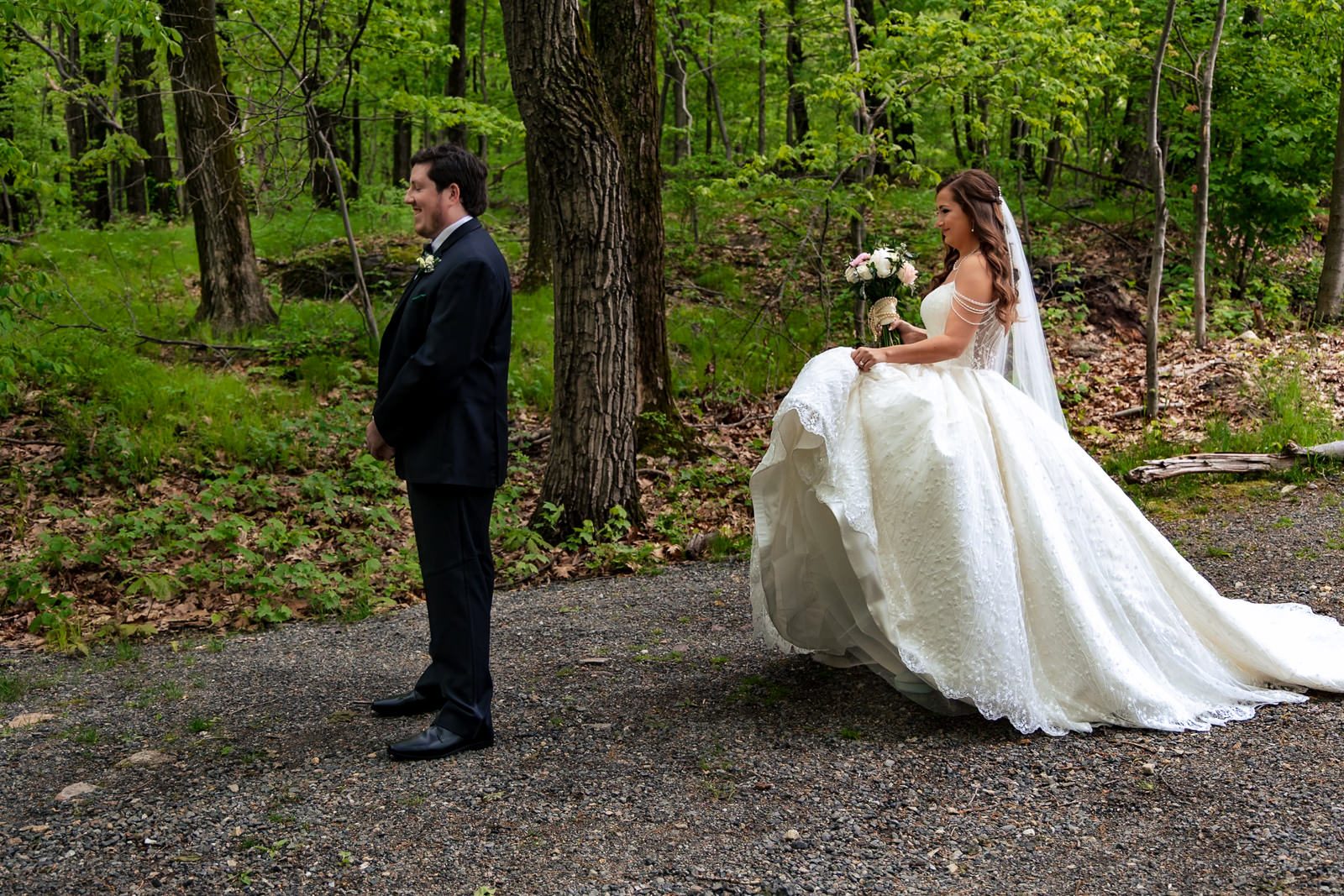
A garden, courtyard, terrace, shaded walkway, or quiet street near the venue can provide a natural setting. Outdoor locations work especially well when there is open shade and enough separation from guests and venue activity.
2. An architectural indoor location
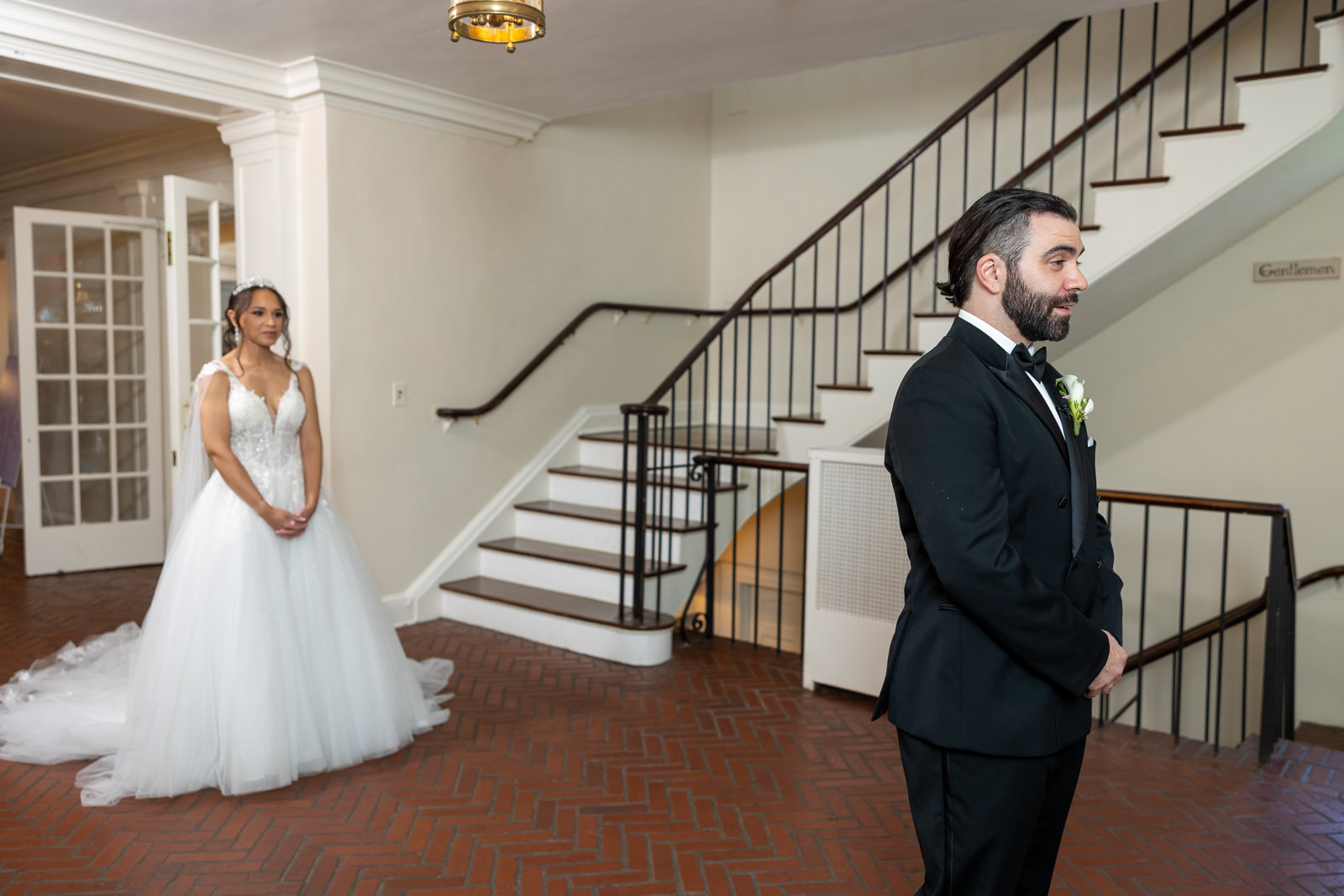
A clean hallway, grand staircase, window-lit room, or understated lobby can feel elegant without distracting from the couple. Indoor locations are also useful when rain, heat, cold, or strong midday light makes an outdoor setup uncomfortable.
3. A private vow exchange
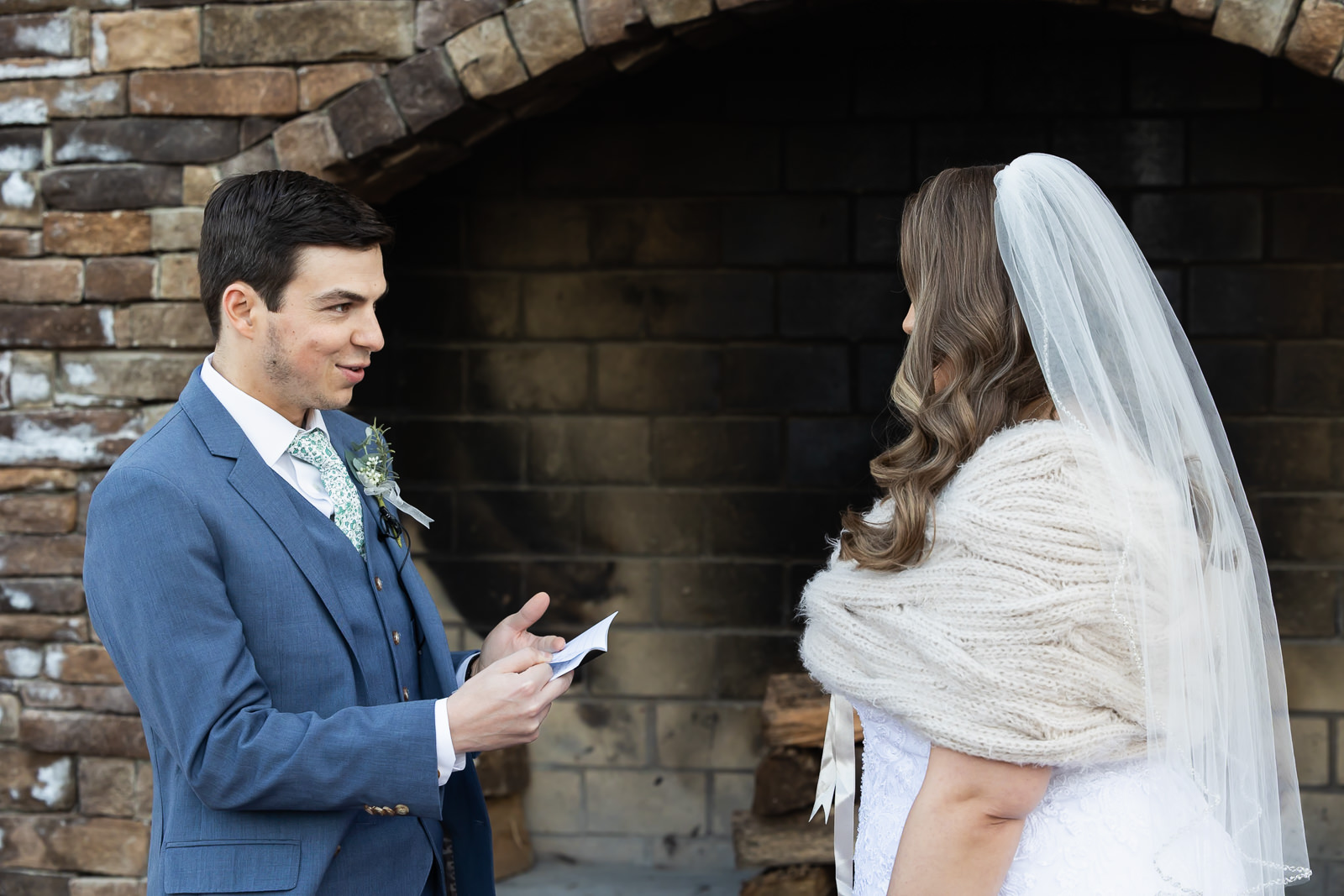
Some couples use the first look to read personal vows or letters they do not plan to share during the ceremony. This can create an especially intimate experience and give each partner space to say more than the ceremony format allows.
If you choose this option, do not worry about facing the camera or holding the letter perfectly. Focus on your partner. The strongest photographs come from the connection between you, not from turning the moment into a posed scene.
4. A first look followed by a short walk
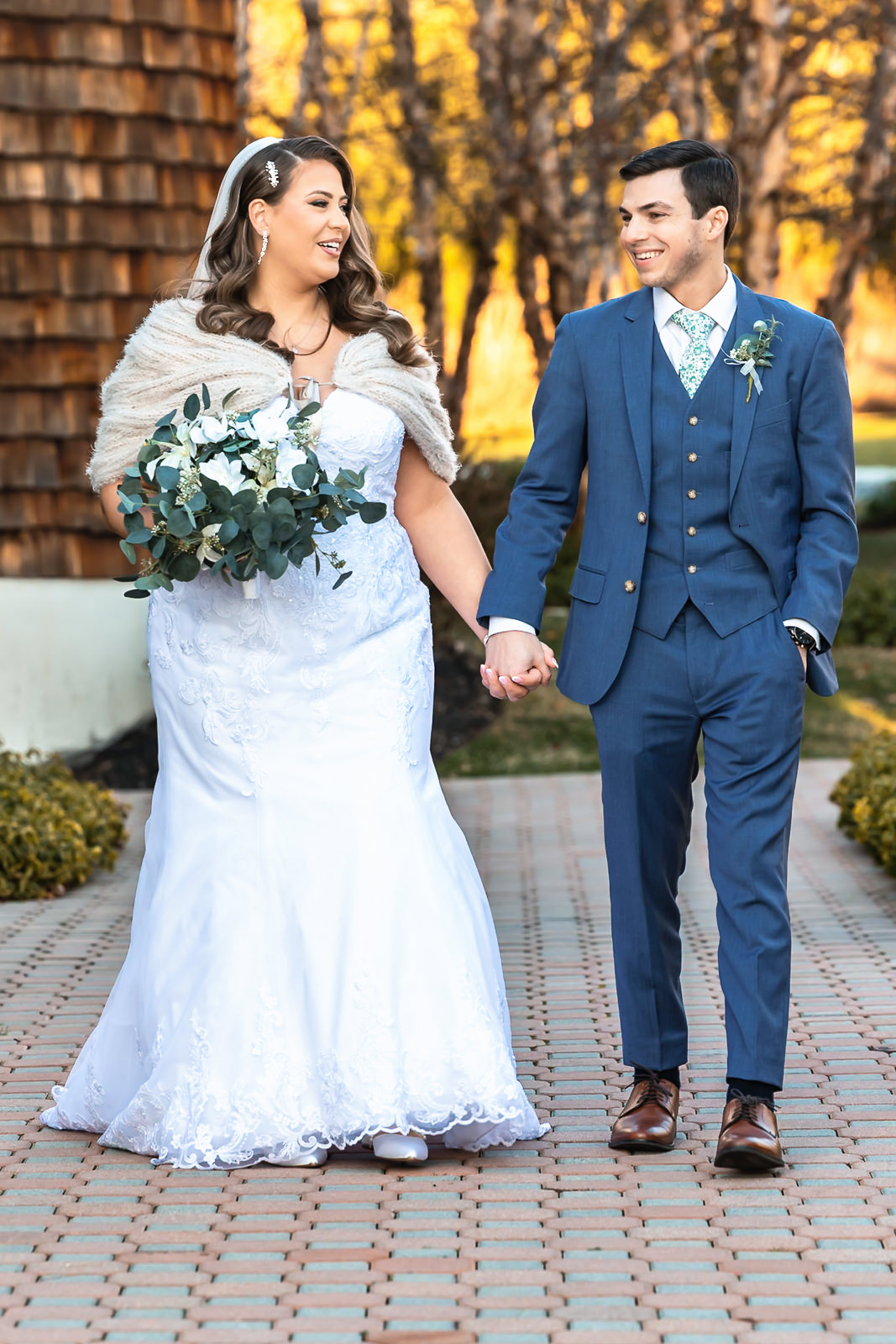
After the initial reaction, taking a short walk together gives you time to talk and settle into portraits naturally. Movement helps couples who feel uncomfortable standing still in front of a camera and often creates relaxed, candid images.
5. A reveal without the shoulder tap
The traditional setup is not your only choice. You can turn toward each other at the same time, walk toward one another from opposite directions, meet around a corner, or simply enter the room and allow the interaction to happen.
6. A first touch without seeing each other
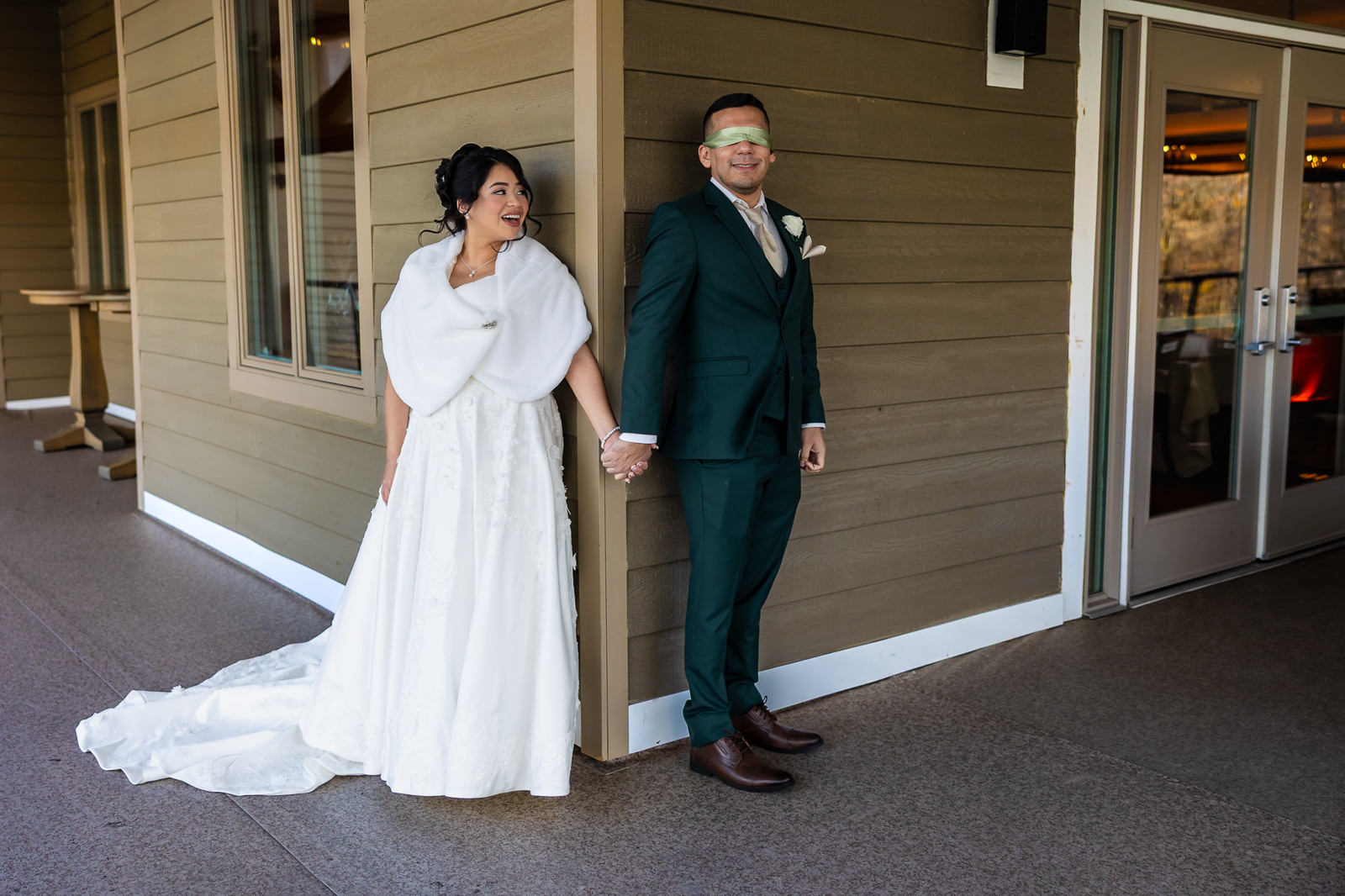
If you want private time together but still want to wait until the ceremony for the visual reveal, consider a first touch. You can hold hands around a doorway or stand back-to-back while reading letters. This gives you a moment of connection while preserving the aisle tradition.
How to Choose the Best First-Look Location
The most recognizable or dramatic location is not always the best choice. I look for four things when selecting a first-look setting: privacy, light, simplicity, and proximity.
Privacy allows you to react without an audience. Good light helps both of you look natural and keeps the photography consistent. A simple background keeps attention on your expressions. Proximity protects the timeline by reducing unnecessary travel.
Your photographer should scout the venue or evaluate the available spaces before the first look. Conditions can change throughout the day, so flexibility matters. A location that looked perfect during a morning walkthrough may be crowded, brightly lit, or inaccessible by afternoon.
It is also worth deciding who will be present. Some couples want parents or the wedding party to watch from a distance. Others want the moment to include only the couple, photographer, and videographer. If privacy is important, communicate that preference early so your wedding planner and wedding party can help protect the space.
How Much Time Should You Allow for First-Look Photos?
For most weddings, I recommend planning approximately 15 minutes for the first look itself and another 20 to 30 minutes for couple portraits immediately afterward. More time may be helpful if you want to exchange private vows, travel to another location, or create a wider variety of portraits.
The overall pre-ceremony photography block is usually longer because it may also include wedding-party and family photographs. A realistic schedule might reserve 75 to 120 minutes from the beginning of the first look through the completion of formal portraits.
The number of people involved makes a difference. A small wedding party and a short family list move quickly. A large wedding party, multiple family groupings, cultural traditions, or several portrait locations require more time.
This is where your first-look plan and wedding timeline should be built together. The goal is not to squeeze in as many photographs as possible. The goal is to make room for meaningful photographs while allowing you to remain present.
Who Else Can Have a First Look?
A first look does not have to be limited to the couple. Other reveals can add meaningful moments to the day, particularly when they involve close relationships.
Popular options include:
- A parent seeing their son or daughter fully dressed
- A first look with grandparents
- A reveal with the wedding party
- Siblings seeing each other before the ceremony
- A couple seeing the reception room before guests enter
These moments work best when they are genuinely meaningful. You do not need to schedule several reveals simply because they appear on wedding checklists. Each additional event takes time and coordination. Choose the ones that reflect relationships you truly want to honor.
When a Wedding First Look May Be Especially Helpful
A first look can be particularly useful when:
- Your ceremony and reception are at the same venue and you want to attend cocktail hour.
- Your ceremony begins near sunset, leaving little natural light afterward.
- You have a large wedding party or an extensive family-photo list.
- You are holding a winter wedding with limited daylight.
- You feel anxious about being apart throughout the morning.
- You want to exchange private vows or letters.
- Your ceremony will include a tight transition into the reception.
For a fall or winter wedding, daylight may be the deciding factor. If the ceremony ends after sunset, waiting until afterward can mean that all couple, wedding-party, and family portraits must be photographed indoors or with artificial light. That can still be beautiful, but it creates a different visual result.
Reasons You May Decide Not to Have a First Look
You may prefer to wait until the ceremony if:
- Seeing each other at the altar is an important tradition for you.
- Your ceremony takes place early enough to allow portraits afterward.
- You want a slower morning without an earlier preparation deadline.
- Your family or cultural traditions shape when you see each other.
- Attending the full cocktail hour is not a priority.
- The idea of staging a reveal feels unnatural to you.
Choosing not to have a first look does not mean your photography will be rushed or incomplete. It simply means the portrait portion of the day must be planned carefully. Family members should know where to gather after the ceremony, the formal list should be organized in advance, and enough time should be reserved before the reception entrance.
Questions to Ask Before Making Your Decision
If you are unsure, talk through these questions together:
- Have we always imagined seeing each other for the first time at the ceremony?
- Would private time together help us feel calmer?
- Do we want to attend most or all of cocktail hour?
- What time does the sun set on our wedding date?
- How much travel is required between our getting-ready, portrait, and ceremony locations?
- How large are our wedding party and immediate families?
- Are there cultural or religious traditions that affect when we can see each other?
- Which choice feels most like us rather than what others expect?
Your photographer and wedding planner can explain how each option affects the schedule, but the final decision belongs to you.
Frequently Asked Questions About Wedding First Looks
Your Moment, Your Choice
A wedding first look can create privacy, calm, and flexibility, but it is not a requirement for beautiful photographs or a meaningful day. Waiting until the ceremony can be just as powerful when it reflects what you genuinely want.
The most important thing is to make the decision early enough to build a realistic schedule around it. A wedding day timeline with a first look requires an earlier preparation time and a protected portrait block. A timeline without one requires enough space after the ceremony for family, wedding-party, and couple photographs.
Whichever option you choose, thoughtful planning will help you stop watching the clock and stay connected to the experience. Let the timeline support the emotion rather than control it.
If you are planning a Brooklyn, New York City, or New Jersey wedding and want photography that balances honest moments with thoughtful guidance, I would love to help you create a photography plan that feels natural to you.
